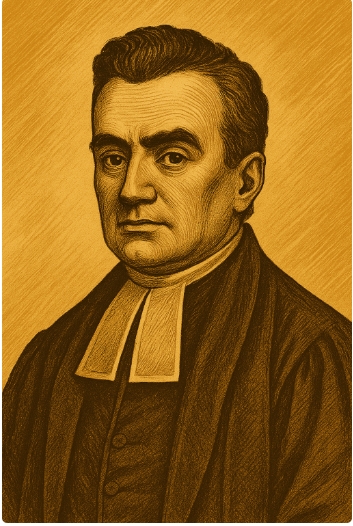
Thomas Bayes (c. 1702–1761): English minister and mathematician whose posthumous "Essay Towards Solving a Problem in the Doctrine of Chances" (1763) introduced what became Bayes' theorem, revolutionizing probabilistic reasoning and modern statistical inference!
One-Sample Estimation — Frequentist & Bayesian (σ known/unknown)
Enter raw data or summary stats. Choose whether σ is known or unknown.
Compare a frequentist confidence interval with a Bayesian credible interval (HPD) and posterior plot.
Bayesian prior on μ
With σ unknown, we use the standard objective (reference) prior; with σ known, you can choose an informative Normal prior.
0 = very weak • 100 = very strong
Try examples:
Fill inputs and click Compute.
Confidence vs credible interval (in one line)
Confidence (frequentist): The *method* hits μ in (say) 95% of repeated samples.
Credible (Bayesian): Given prior + data, there is 95% posterior probability μ lies in this interval.
Assumptions & when to worry
- Independent observations; approximately Normal data. With n ≥ 25, mild skew is OK.
- Unknown σ uses t; known σ uses Normal.
- Informative prior only used when σ is known (kept simple for teaching).