
Valley and Ridge Physiography: Characteristic Features (Part 2)
• Another feature of the Valley and Ridge is the presence in some areas of inverted topography. Inverted topography occurs when a topographically low area forms on a geological feature that is structurally high (a topographic valley on a structural anticline) or vice versa (a topographic ridge on a structural syncline).
Slide show


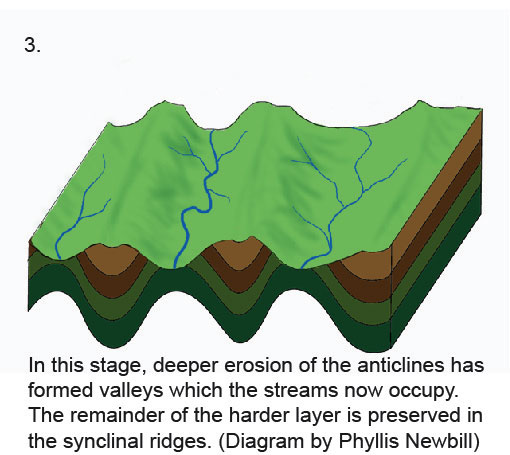
Click to view slides: 


• Massanutten Mountain is an example of a syncline that has formed a mountain.
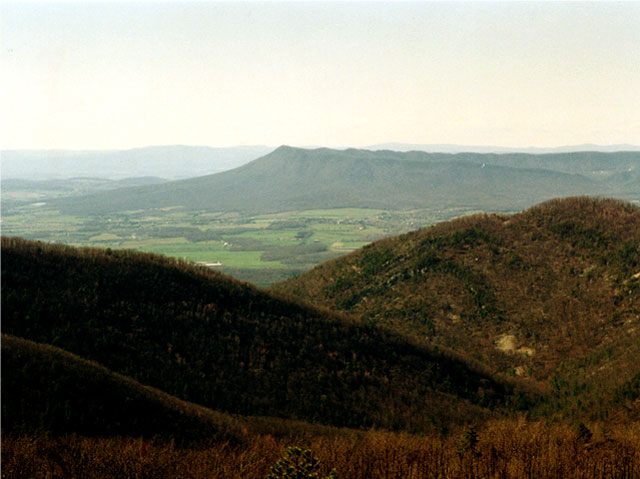
 Examples of inverted topography can be found throughout the Valley and Ridge of Virginia. Massanutten Mountain, shown here, is a syncline that has formed a ridge. (Photograph by Stan Johnson)
• Burkes Garden is an example of an anticline that has formed a valley.

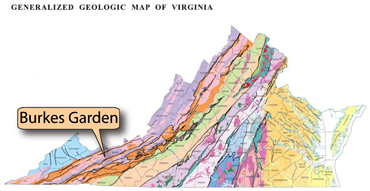 Burkes Garden, in Tazewell County, is another example of inverted topography. Here erosion has cut through a sandstone anticline and reached the softer rocks below. The softer rocks now form a low valley, called Burkes Garden in the center of the anticline. (Photograph courtesy of American Electric Power)